Die OstBridge-Team specializes in providing a diverse range of comprehensive solutions and components tailored for various applications in the field of Angle Encoders.
Winkelgeber share similarities with rotary encoders as they both monitor and provide feedback on rotational movement. However, angle encoders stand out by offering superior accuracy compared to rotary encoders.
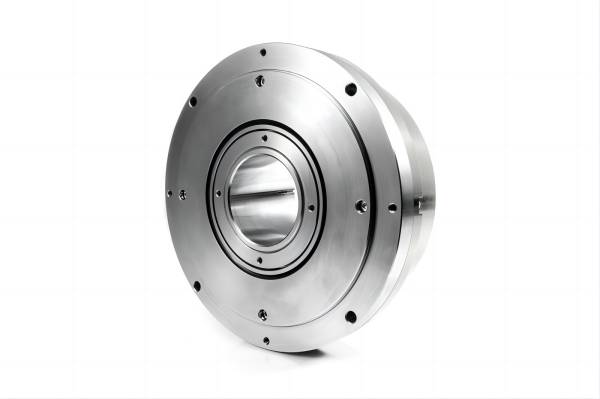
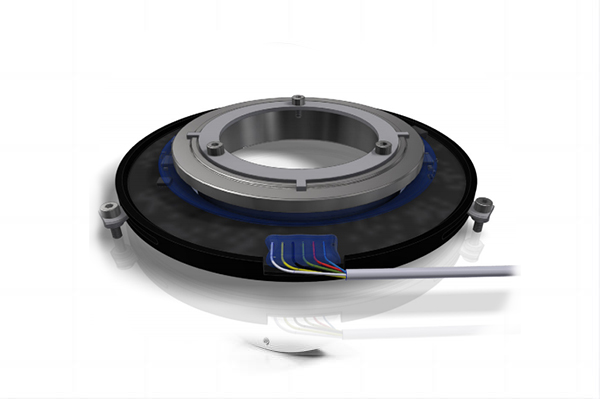
Angle Encoder Module is the key part of an Angle Encoder. The Module consists of two separate components, the encoder glas disc and the readhead module. Features of encoder module:
-no friction or mechanical contact
-high repeatability
-Flexible installation and compact siz
-cost-effective
-assembly process impact
-simple mechanical construction
- HEIDENHAIN
- PRECIZIKA
- PHAGOR
- YUHENG China
- PRECIZIKA
- Ostbrücke
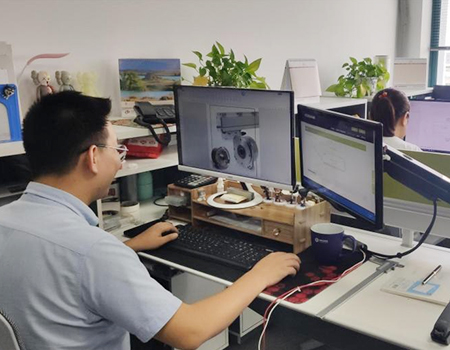
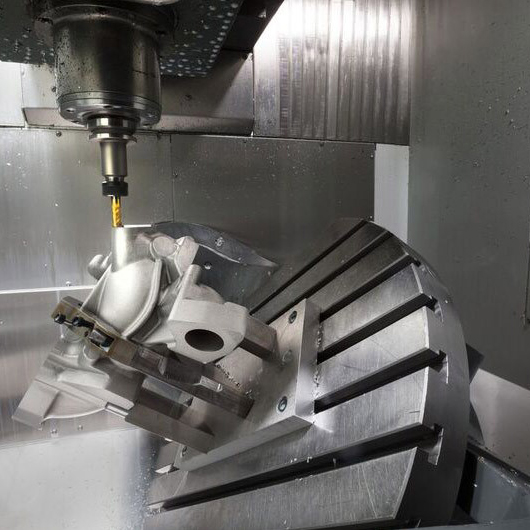
- -Extensive experience with Angle Encoder applications
When you approach us with your requirements, our team will carefully analyze factors such as resolution, accuracy, speed, environmental conditions, and interface compatibility. By considering these parameters, we can provide you with tailored recommendations for the angle encoder that best fits your needs. - -Starkes Ingenieur- und Vertriebsteam
Local technical team is available for selection, local installation and testing. International sales team can provide quotation service for global customers - -One-stop Angle Encoder Solution
We have the privilege of being in touch with a select group of global manufacturers who have earned a reputable position in the realm of high precision angle encoders.
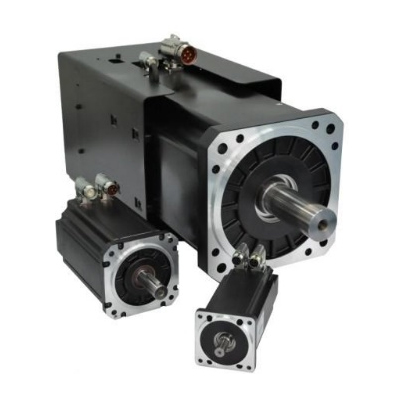
An angle encoder is a specialized position sensor designed to measure the angular position of a rotating shaft. Typically, angle encoders employ optical technology, utilizing a disk-shaped rotor with an optical grating that interacts with an opto-electric sensor on the stator. The optical system relies on precise rotation of the rotor in relation to the stator, necessitating the inclusion of bearings in most angle encoders to ensure concentric alignment between the two components. By maintaining this tight constraint, angle encoders facilitate accurate and reliable measurement of angular positions. Angle encoders serve the purpose of measuring rotation, similar to their rotary counterparts. However, they are particularly suitable for applications that demand utmost precision in measurement.
For Angle Encoders we usually talk about optical angle encoder. Optical angle encoders use a patterned disk (grating) on the rotating part and a stationary sensor. A light source shines on the grating, and the sensor detects changes in light intensity as the grating rotates. These changes are converted into electrical signals that indicate the angular position of the rotating shaft.
- High precision: Accurate and precise measurement of angular positions.
- Real-time feedback: Immediate and responsive control and positioning.
- Non-contact measurement: No physical contact reduces wear and enhances reliability.
- High-speed operation: Capable of handling fast rotational speeds.
- Environmental robustness: Withstands harsh conditions and contaminants.
- Compatibility: Can integrate with various control systems and interfaces.
- Vielseitigkeit: Geeignet für eine Vielzahl von Branchen und Anwendungen.
Here's a table summarizing the differences between angle encoders and rotary encoders:
| Winkelgeber | Drehgeber | |
| Design | Consist of rotor and stator | Can be in various designs |
| Messprinzip | Optical, magnetic, capacitive, inductive | Optical, magnetic, capacitive, incremental, absolute |
| Zweck | Specifically for measuring angular positions | Can measure both linear and rotary positions |
| Zusätzliche Funktionen | Primarily focus on precise angular measurement | Can provide information on speed, direction, or absolute position |
| Anwendungen | Robotics, machine tools, motion control systems, navigation systems | Automation, manufacturing, robotics, audio equipment, speed/position control |
To choose the right angle encoder for your application, several parameters should be considered. These parameters include:
Resolution, Encoder Type, Repeatability, Accuracy, Interface Protocol, Environmental Considerations, Shaft Size and Mounting, Electrical Supply, Cost
Wir sind hier, um Ihnen zu helfen. Unser Team aus qualifizierten Vertriebsmitarbeitern und Ingenieuren steht Ihnen zur Verfügung.
Wir sind darauf spezialisiert, Ihre anspruchsvollsten und technisch komplexesten Anfragen zu Encodern umgehend zu beantworten.
Wir melden uns umgehend bei Ihnen zurück.
Jegliche Erwähnung von Namen, Marken oder Produkten Dritter auf dieser Website dient ausschließlich Informationszwecken.
Alle Bilder, Illustrationen, Icons und Fotografien sind urheberrechtlich geschützt und/oder stellen sonstige geistige Eigentumsrechte dar, die Dritten gehören, von diesen kontrolliert oder lizenziert werden.